
Tender and bid design for civil and construction

Prequalification is cleared. What happens next is decided on paper.

At this stage the question is not whether the business can do the work. The panel already knows it can. The question is which business presents the strongest case on paper.

'Strate designs tender and bid submissions as a single response built around a specific opportunity or as a master template built for repeated internal use.
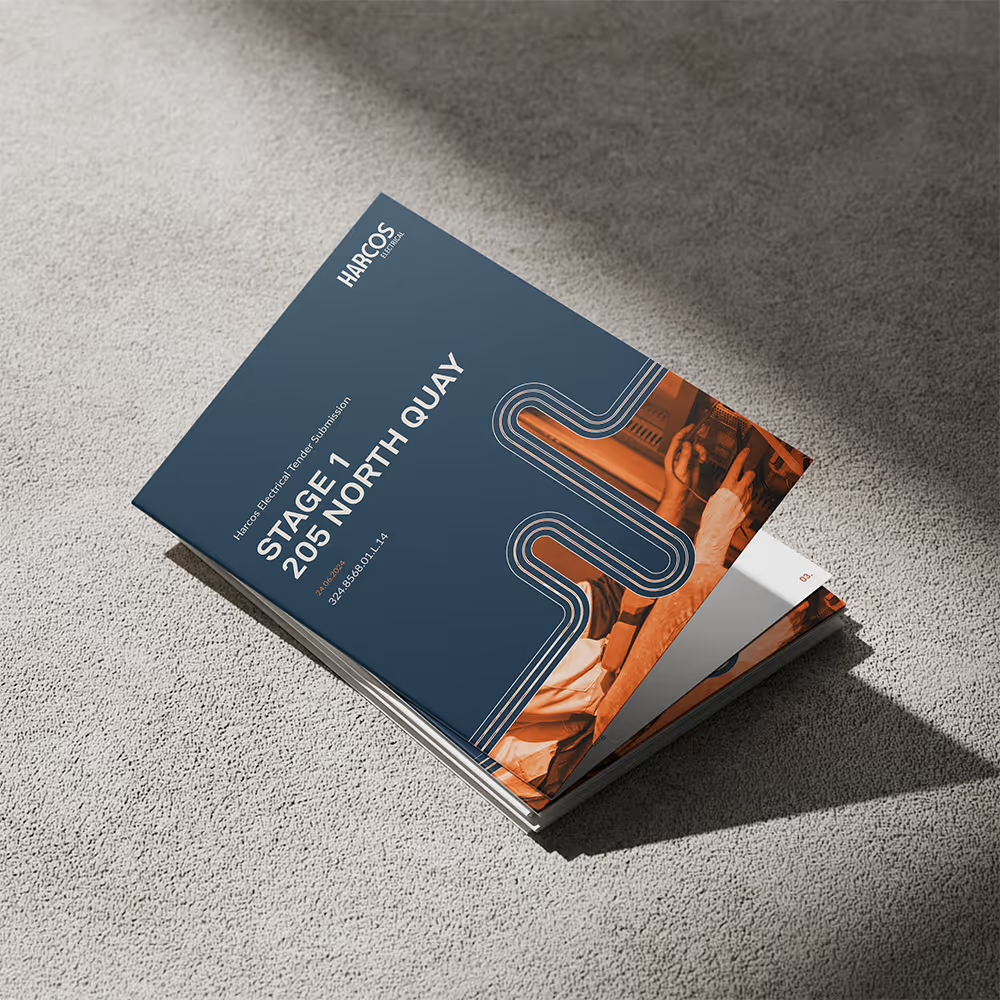
Tender submission designed for electrical business | 'Strate
Company: Harcos Electical
Client: Harcos Electrical

A strong submission does not guarantee the win. A weak one can cost it.

CAPABILITY IS A GIVEN
The margins are narrow. A weak submission is where they widen against you.

The panel assessing your submission might be assessing ten others. Against a scoring matrix, under time pressure, with a pile of submissions behind yours. The question is not whether the content is there. It is whether the panel can find it, follow it, and score it without working for it.

The structure leads the panel through the argument in the order that builds the strongest case. The presentation signals that the business takes the opportunity seriously. The formatting meets the requirements so the business does not leave a technicality to chance.

The argument is yours to make. Making sure nothing gets in the way of it is ours.
What to expect
Three ways to build the submission.
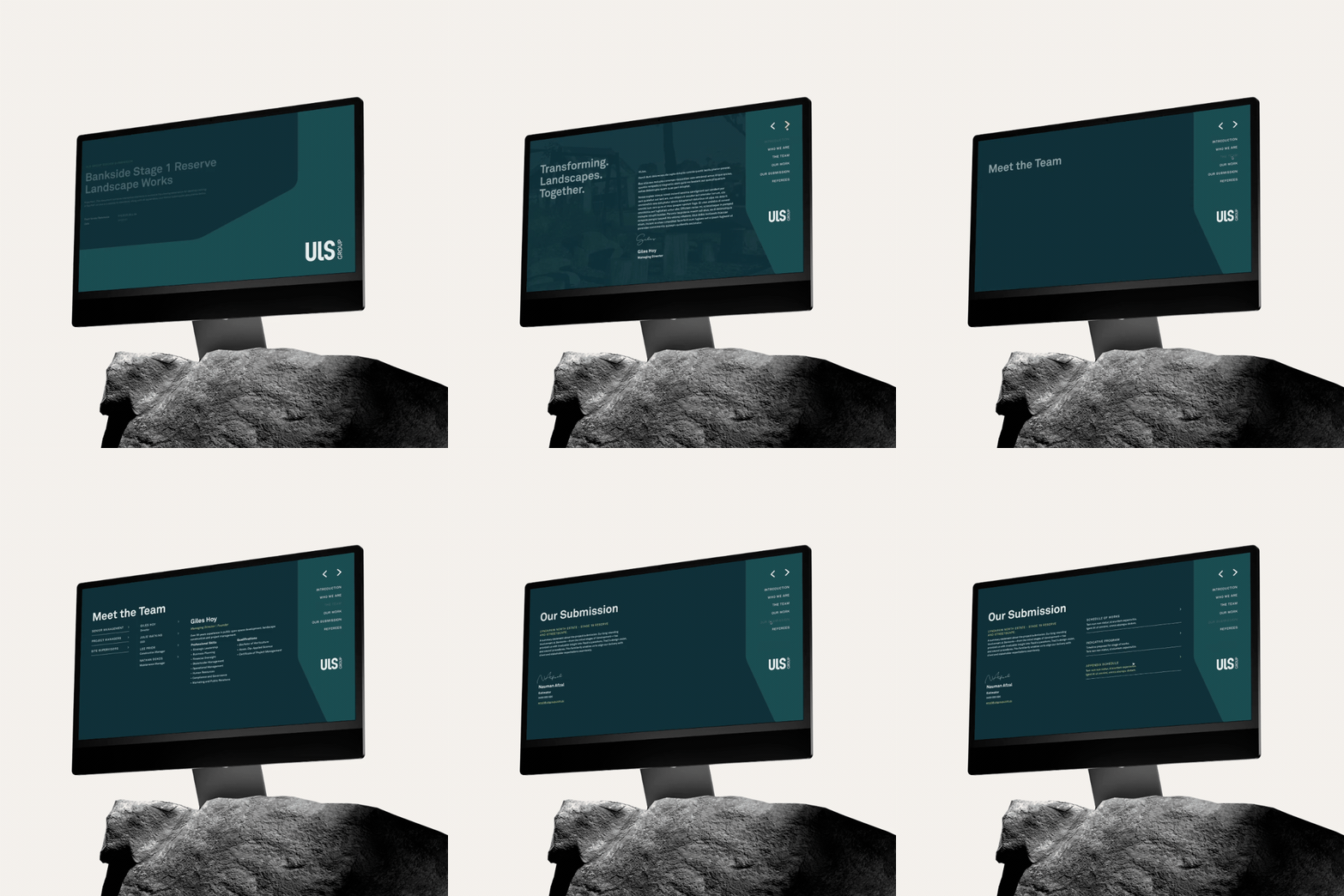
Interactive Tender Response design for commercial landscape firm | 'Strate
Company: ULS Group
Client: Juno Creative
01.
Project Specific

A specific submission designed and presented to the standard the work deserves. The content and structure come from the business. 'Strate applies the visual presentation, formatting, and layout that is cross-checked against the submission requirements.

02.
Master Template

A templated, modular tender document built as an extension of the capability statement. Pre-formatted sections, modular page design, and the brand applied throughout. The business can populate and submit without engaging a designer every time an opportunity comes up. Built once, used across multiple submissions, updated as the business evolves.

03.
Online Interactive

For submissions that allow flexibility in format, an interactive response does something a static document cannot. Built for screen, it navigates like a website. Intuitive navigation, media, and linked references that replace bulk attachments. A submission the reader can move through rather than wade through. Not appropriate for every tender. Highly effective for the right one.

The outcome
A submission that matches the work behind it

A tender response, master or interactive template built to present the business at the level it is operating at. Structured to the required format and designed to make the argument clearly.

FAQs
What is the difference between a capability statement and a tender response?
arrow down
A capability statement gets the business to the tender. The tender response is what it is judged on once it is there. The capability statement establishes who the business is, what it has delivered, and why it is worth considering. The tender response is the argument made once the business is already in the field. It is specific to the opportunity, structured against the evaluation criteria, and built to present the strongest possible case for the business against the others on the shortlist.
Capability Statements
Do you write the tender content?
arrow down
No. The response content, the methodology, the pricing, the team, the relevant experience, comes from the business. 'Strate handles the structure, layout, and visual presentation. Where the content needs to be shaped into a cleaner argument or edited for clarity, that is a conversation worth having. But the substance of the response belongs to the business. Nobody knows the work better than the people who delivered it.
How far in advance should we engage before a tender deadline?
arrow down
As early as possible. A single tender response needs a minimum of one to two weeks depending on the volume and complexity of the submission. A master template takes longer and should not be built under deadline pressure. Engaging after the tender has been released and the deadline is close limits what is achievable. The businesses that present the strongest submissions are rarely the ones that started last.
Can the master template be used across multiple tenders?
arrow down
Yes. That is the point of it. The master template is built once, branded throughout, and structured so the business can populate and submit independently every time an opportunity comes up. Sections that change per submission are designed to be updated easily. Sections that remain consistent across submissions are locked in and ready to go. The investment in the template is recovered across every submission that follows.
What if the tender has a required format or template?
arrow down
Most do, to varying degrees. Where the procuring organisation has provided a specific format, template, or lodgement requirement, the submission is built within those parameters. The design work is applied within the required structure rather than over it. Where there is flexibility in presentation, that flexibility is used. Where there is not, the focus shifts to clarity, consistency, and making sure the content addresses every criterion without the submission being set aside on a technicality.
What is different about government tender submissions?
arrow down
Government procurement operates differently from private sector tendering, and it is worth being upfront about that. Australian Government submissions, for example, are evaluated against mandatory criteria and specific conditions for participation. Missing a single requirement can see the submission set aside before the content is considered at all. The response order should follow the structure of the request documents, and marketing material is generally not permitted unless specifically allowed.
Because the evaluation is scored on content against criteria, the design brief for a government submission is a different job. The focus is not visual differentiation. It is clarity, compliance, and making sure every criterion is addressed completely and is easy for the panel to find and score. That is where the presentation work matters in this environment: not to stand out, but to make sure nothing costs the business on a technicality.
For businesses primarily pursuing government work, a tender consultant who specialises in government procurement is worth engaging alongside the design work.
Aus Gov | Building Your Best Response
Do you work with tender/bid consultants?
arrow down
Yes. Tender consultants bring the procurement strategy and response writing. 'Strate brings the design, structure, and presentation. The two roles complement each other and the best submissions are usually the ones where both are involved. If a consultant is already engaged on a submission, the process for working alongside them is straightforward.
ARO Tenders | The Downfall of Delivering a Bid Internally
Can you help with EOI submissions as well?
arrow down
Yes. An Expression of Interest is often the first formal step in a procurement process and the standard of the submission is being assessed at that stage. The same principles apply. Clear structure, consistent presentation, and a response that addresses what is being asked without padding. Where an EOI leads to a full tender, the groundwork done at EOI stage carries forward.