Capability statements for civil and construction

The capability statement is doing the qualifying when you are not in the room.

By the time it is read, the business has already been judged on it. Most capability statements were built to describe the company, not to get it through the assessment that decides the work. 'Strate builds the one that does.
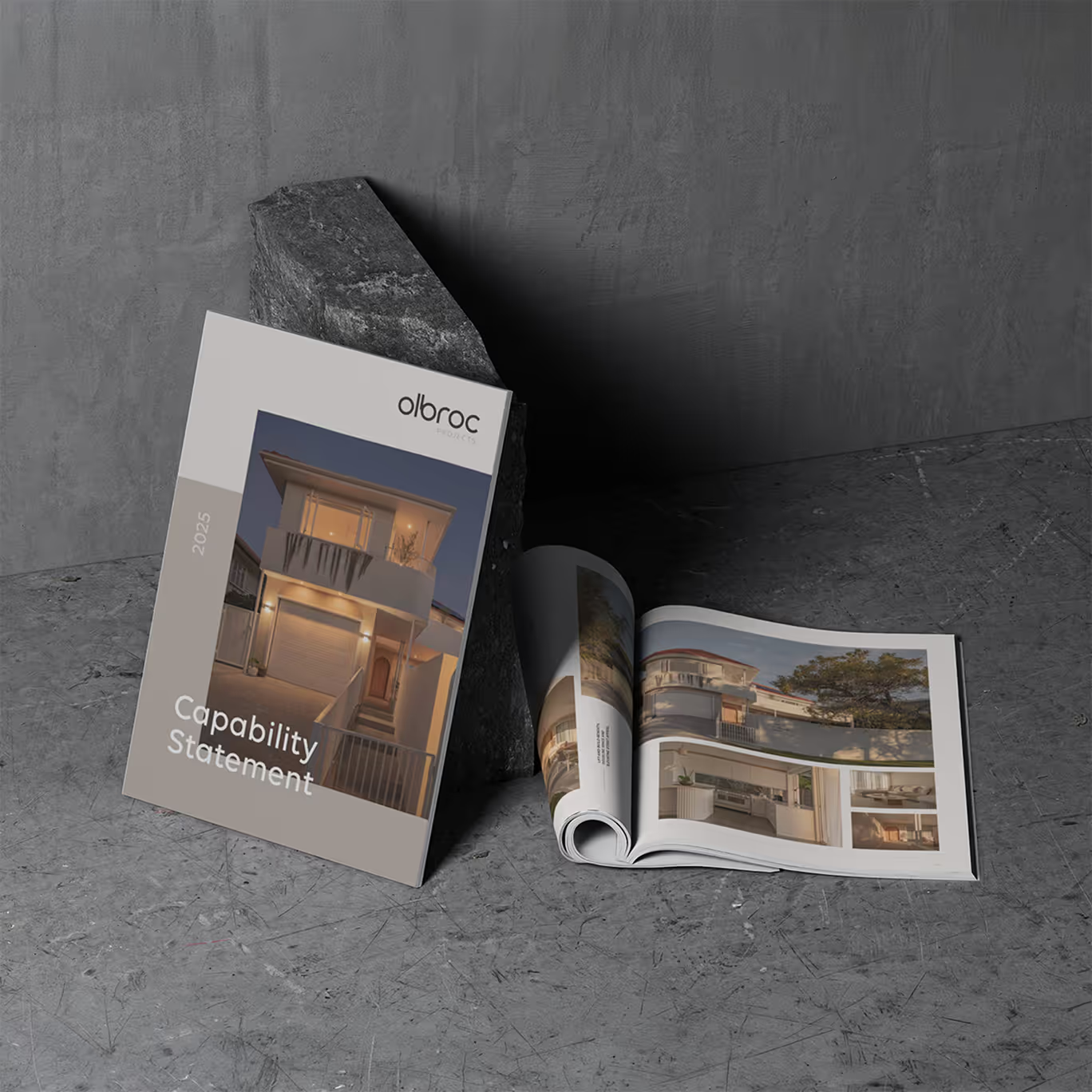
Capability statement for home builder | 'Strate
Company: Olbroc
Client: Juno Creative

You do not get to explain your capability statement. It explains you.

not a brochure
It is built to filter, not to flatter.

A capability statement is not there to describe the business. It is there to get it through the next assessment. Three things decide whether it does.

01.
It qualifies before you speak

A capability statement is read before anyone meets the business. Sent ahead, attached, forwarded, and assessed by people deciding whether you are worth the conversation. Whatever it says is what the business is, to that reader, in that moment.

02.
It proves capability or exposes the lack of it

The reader is not taking the business at its word. Named projects, real credentials, and work at the right scale are what separate a capable operator from a confident one. Generic claims do not survive the read. Specifics do.

03.
It clears the risk before anyone raises it

The question underneath every assessment is whether bringing this business in introduces risk that was not there before. A capability statement that answers that question before it is asked is the one that makes the shortlist.

What is inside
The capability statement is doing the qualifying when you are not in the room

The sequence is constant. The content within each section is built around the sector the business operates in and the audience reading it.
1. Cover and positioning statement
The first impression the document makes
2. Company overview
Who the business is, in commercial terms
3. Key statistics
Proof the business is operating at scale
4. Services and technical capability
What the business is qualified to deliver
5. Project portfolio
Evidence the work has been done before
6. Key personnel
The people they will be working with
7. Safety, quality, and accreditations
Confirmation the business can operate
8. Client references and contact
The proof point that closes the document
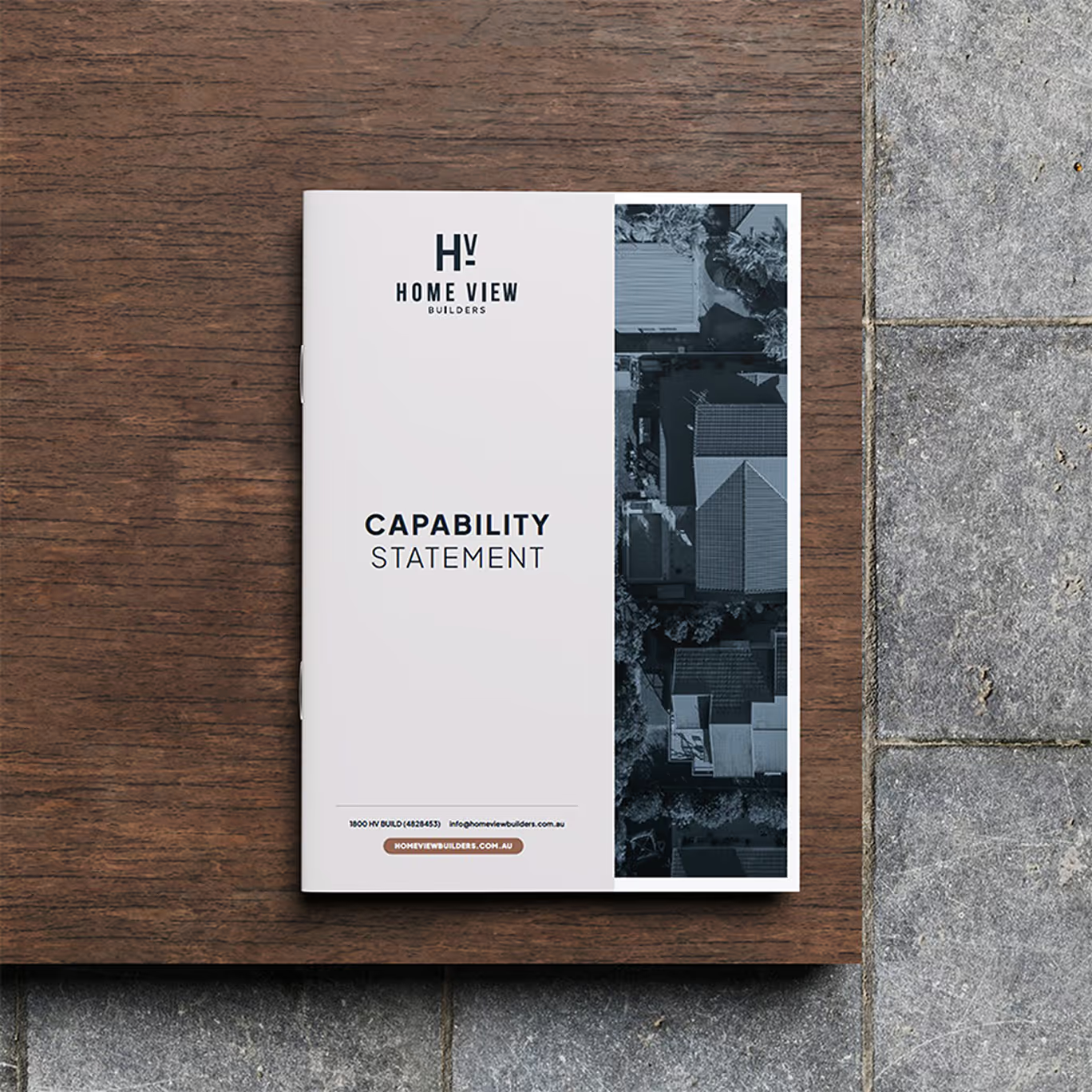
Capability statement for home builder | 'Strate
Company: HV Builders
Client: Juno Creative
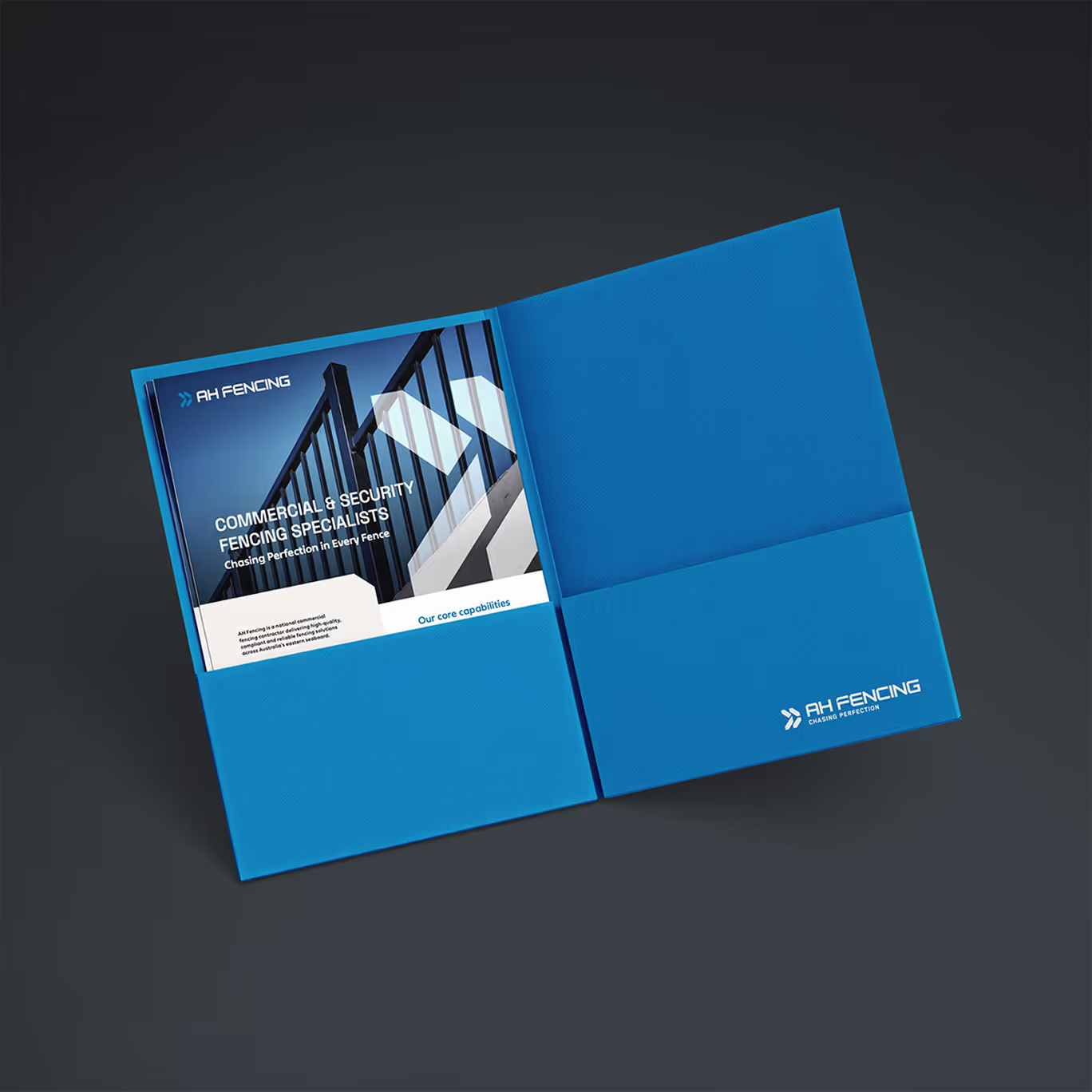
Capability statement for commercial fencing contractor | 'Strate
Company: AH Fencing
Client: Juno Creative
What to expect
A document ready to do its job

Every capability statement begins with a review of existing materials, project records, accreditations, and imagery. From there the document is structured, designed, and refined in stages with clear review points throughout. Final files are supplied as a print-ready PDF or published online InDesign link, digital screen version, and InDesign source files so the document can be updated internally as the business evolves.

FAQs
What is the difference between a company profile and a capability statement?
arrow down
A company profile is descriptive. It tells the reader what the business is. A capability statement is evaluative. It tells the reader what the business can be trusted to deliver. The two documents share content but the framing is different. A company profile is written for general use. A capability statement is written for the person assessing the business against a specific project, contract, or procurement process. For prequalification and tender contexts, the capability statement is the document being asked for.
How long is a capability statement?
arrow down
It depends on the business. The final page count is built around what the document needs to do, not a target length. Twelve to sixteen pages is the standard length for a capability statement built for prequalification and EOI submissions. Four to eight page documents struggle to carry the project portfolio, personnel, and safety data that head contractors and procurement teams now expect at this stage. Longer than sixteen page documents start losing the reader.
How often should a capability statement be updated?
arrow down
Once a year as a baseline, and immediately when major projects complete, key personnel change, accreditations are added, or the business moves into a new sector. A capability statement that lists projects from three years ago is signalling that nothing significant has happened since. Procurement readers notice. Native source files are supplied at the end of every project so updates can be made internally where the business has the capacity, or brought back to 'Strate if you need us.
Will a capability statement built for subcontractor work hold up for a government tender?
arrow down
No. A capability statement is structured around commercial credibility. A government tender requires a different level of evidence entirely. Formal accreditations, demonstrated experience on comparable scopes, safety data, and response formats specific to the procurement process. The document that works for a head contractor introduction is rarely the document that wins government work.
For tender and bid submission design, that is a separate engagement built around what the specific opportunity requires.
Tender & Bid Design
What is the difference between a static PDF and an interactive capability statement?
arrow down
Both are supplied as a PDF. The difference is what the reader experiences when they open it. A static document is linear — the reader moves through it page by page. An interactive capability statement is built for a different kind of reading experience. Navigation between sections, embedded video, expandable project detail, and interactive elements that let the reader move through the document the way they would move through a website. A director introduction, site footage, or a client testimonial sits inside it rather than being sent separately.
Whether the interactive version is right depends on the business and how it sells. For businesses competing in environments where multiple firms are being compared on paper, the interactive version signals a level of investment and forward thinking that the static document cannot. For straightforward submissions where the content is doing the work, the static document does the job.
Adobe Publish Online
Do I need a capability statement if I have a website?
arrow down
Yes, because they do different jobs. A website is read at the reader's pace, in their own time, in their own sequence. A capability statement is read in a single sitting, in a structured order, with a defined conclusion. Procurement and prequalification processes specifically request capability statements because the document is comparable across firms in a way that websites are not. The website carries the brand. The capability statement closes the credibility gap.
Websites
Does a capability statement just repeat what is on the website?
arrow down
They draw from the same source material. The same projects, personnel, and accreditations. But they deploy it differently. The website gives the reader room to explore at their own pace. The capability statement controls exactly what they see and when, read in a single sitting at a specific point in the evaluation process. Where the two repeat each other verbatim the capability statement loses its value as a document. The content comes from the same well. The way it is expressed is specific to each format.
Websites
Do you write the copy for the capability statement?
arrow down
Final copy is the responsibility of the client because the business knows its projects, its people, and its credentials better than anyone. The structure and content framework are developed as part of the design process. Each section is mapped out with guidance on what needs to be included and how much content each page requires. Where copywriting support is needed, we can connect you with trusted specialists.
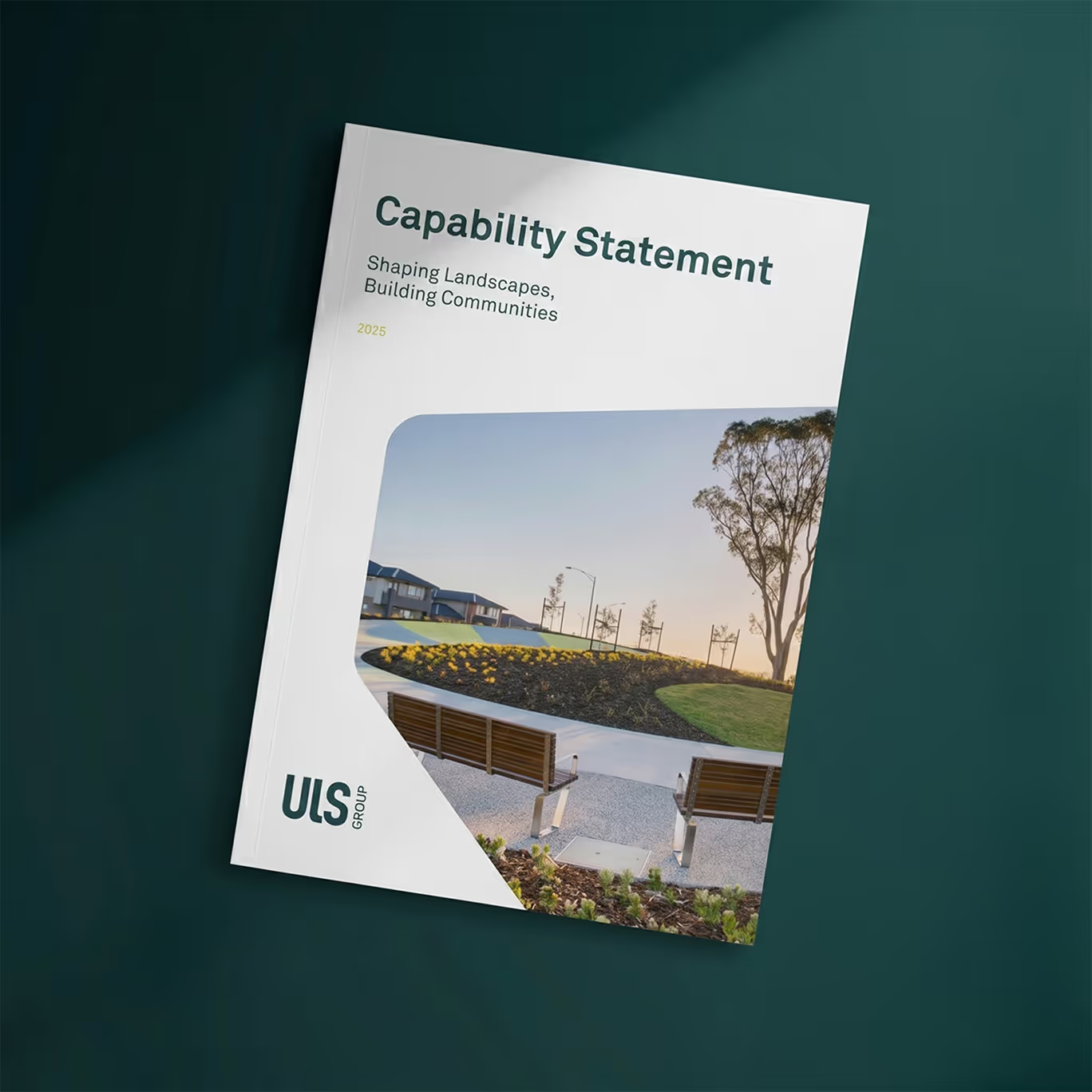
Capability statement for commercial landscaping | 'Strate
Company: ULS Group
Client: Juno Creative